



مقياس توتر العين الارتدادي مقابل مقياس توتر العين بالنفخ الهوائي: أيهما يناسب إجراءات الفحص الحديثة في عيادات العيون؟
2026-04-08 17:37نعم في كثير من الأحيان. توصف مقاييس التوتر الارتدادي عادةً بأنها سهلة الاستخدام ومناسبة تمامًا لسيناريوهات الفحص المحمولة أو المتنقلة، ويتم وضع خط إنتاجك الحالي على هذا النحو أيضًا.[3][6][7]
هل قياس ضغط العين بالنفخ الهوائي أفضل دائمًا لأنه لا يتطلب التلامس؟
لا. يمكن أن تتناسب عملية الفحص بدون تلامس مع بعض بيئات الفحص بشكل جيد، ولكن تظل اختلافات الأساليب قائمة، ويعتمد الخيار الأفضل على سير العمل والسكان.[2][4]هل يمكن أن يكون قياس ضغط العين الارتدادي مفيدًا عند الأطفال؟نعم. خلص تقييم التكنولوجيا الذي أجرته الأكاديمية الأمريكية لطب العيون إلى أن قياس ضغط العين الارتدادي يبدو دقيقًا إلى حد معقول لدى العديد من الأطفال ويمكن استخدامه غالبًا بدون تخدير عام.[5]
هل ينبغي للعيادات أن تتعامل مع قياسات الارتداد وقياسات نفخ الهواء على أنها قابلة للتبادل تمامًا؟
ليس بالضرورة. تُظهر الدراسات وجود ارتباطات قوية ولكن أيضًا اختلافات كبيرة بين الطرق، لذلك يجب أن يأخذ التفسير سياق الطريقة في الاعتبار.[2][8]
مراجع
[1]
StatPearls.
قياس ضغط العين.
[2]
ديميرسي جي، وآخرون.
مقارنة بين قياس ضغط العين بالارتداد وقياس ضغط العين بالنفخ الهوائي بدون تلامس لدى الأشخاص الأصحاء.
2019.
[3]
ناكامورا س.مقياس توتر العين الارتدادي من شركة Icare: مراجعة لخصائصه وتطبيقاته السريرية.2018.[4] Khalil KM, et al.
تقييم دقة مقياس ضغط العين بالنفخ الهوائي مقارنة بمقاييس ضغط العين الأخرى.
2025.
[5]
الأكاديمية الأمريكية لطب العيون.
قياس ضغط العين الارتدادي عند الأطفال (أخصائي علاج وظيفي).
[6]
KernelMed.
مقياس ضغط العين المحمول باليد ذو الدعامة المزدوجة CN-1612.[7]KernelMed.
مقياس ضغط العين المحمول ذو خاصية الارتداد مع الطباعة اللاسلكية CN-1613.
[8]
كاجياما م، وآخرون.
مقارنة مقياس ضغط العين الارتدادي ICare مع مقياس ضغط العين غير التلامسي لدى الشباب الأصحاء.
2011.
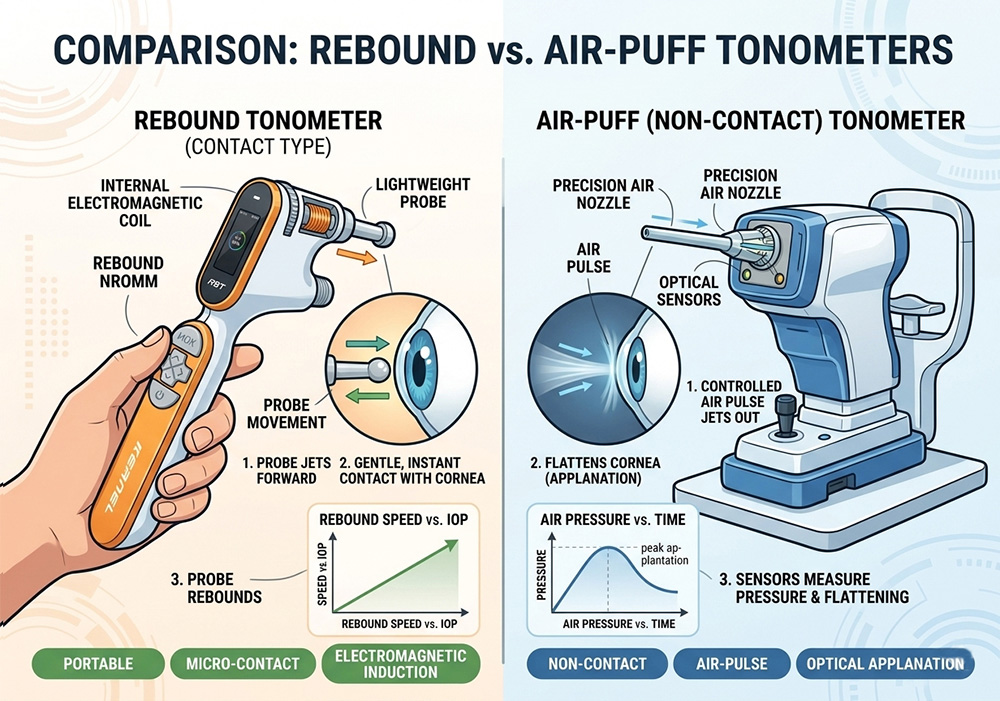
Rebound tonometers and air-puff tonometers support different screening styles. Rebound tonometry is often better aligned with portable, flexible, and lower-barrier workflows, especially where mobile screening or pediatric feasibility matters. Air-puff tonometry may still fit well in fixed non-contact screening environments. The choice should be based on clinic workflow, patient population, and practical use rather than broad assumptions about which method is newer or simpler.
Explore KernelMed's ophthalmic tonometer solutions for portable IOP screening and clinic-friendly workflow support.
FAQ
What is the main difference between a rebound tonometer and an air-puff tonometer?
A rebound tonometer uses a lightweight probe with brief corneal contact, while an air-puff tonometer measures IOP using a pulse of air in a non-contact workflow.[2][3]
Is rebound tonometry more suitable for portable screening?
Often yes. Rebound tonometers are commonly described as easy to use and well suited to portable or mobile screening scenarios, and your current product line is positioned that way as well.[3][6][7]
Is air-puff tonometry always better because it is non-contact?
No. Non-contact operation can fit some screening environments well, but method differences remain, and the best choice depends on workflow and population.[2][4]
Can rebound tonometry be useful in children?
Yes. The AAO technology assessment concluded that rebound tonometry seems reasonably accurate in many children and can often be used without general anesthesia.[5]
Should clinics treat rebound and air-puff measurements as fully interchangeable?
Not automatically. Studies show strong correlations but also significant differences between methods, so interpretation should take method context into account.[2][8]
References
[1] StatPearls. Tonometry.
[2] Demirci G, et al. Comparison of rebound tonometry and non-contact airpuff tonometry in healthy subjects. 2019.
[3] Nakakura S. Icare rebound tonometers: review of their characteristics and clinical applicability. 2018.
[4] Khalil KM, et al. Evaluation of the Accuracy of Air-puff Tonometer Compared to Other Tonometers. 2025.
[5] American Academy of Ophthalmology. Rebound Tonometry in Children OTA.
[6] KernelMed. Handheld Rebound Tonometer with Dual Support CN-1612.
[7] KernelMed. Portable Rebound Tonometer with Wireless Printing CN-1613.
[8] Kageyama M, et al. Comparison of ICare rebound tonometer with noncontact tonometer in healthy young subjects. 2011.