



كيفية تقييم نظام الليزر لنمو الشعر بما يتجاوز الطول الموجي وعدد الثنائيات
2026-05-13 17:15خاتمة
يمكن لأنظمة الليزر لتحفيز نمو الشعر أن تلعب دورًا عمليًا في علاج تساقط الشعر الحديث، خاصةً عندما تُدرك العيادات والموزعون دورها الحقيقي في سير العمل. يُعدّ طول الموجة وعدد الثنائيات ومدة العلاج مواصفات مفيدة، لكنها لا تكفي وحدها لتحديد مدى ملاءمة النظام.
ينبغي على العيادات تقييم نوع المريض، وتغطية العلاج، والالتزام به، وشكل الجهاز، وقابلية تكرار سير العمل، والمتابعة. كما ينبغي على الموزعين تصنيف خط الإنتاج حسب نوع العميل وحالة الاستخدام بدلاً من الاعتماد على المواصفات فقط.يستكشفأنظمة نمو الشعر من KernelMed
للعلاج في العيادات، والعلاج باستخدام الخوذة، وأشكال القبعة المحمولة.
التعليمات
هل العلاج بالليزر منخفض المستوى فعال لنمو الشعر؟
تتوفر أدلة سريرية تدعم استخدام العلاج بالليزر منخفض المستوى في علاج داء الثعلبة الأندروجينية، بما في ذلك الدراسات العشوائية والمراجعات المنهجية، ولكن النتائج تعتمد على اختيار المرضى، وبروتوكول الجهاز، والاستخدام المنتظم. ينبغي اعتباره خيارًا داعمًا غير جراحي، وليس علاجًا مضمونًا.ما هو الطول الموجي المستخدم عادةً في علاج نمو الشعر بالليزر؟
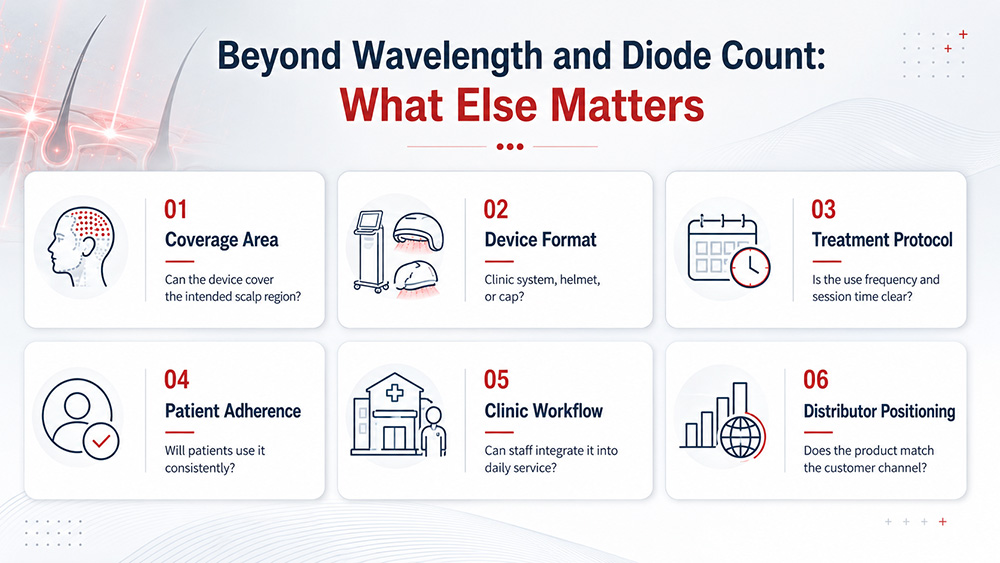
تستخدم العديد من أجهزة الليزر لتحفيز نمو الشعر ضوءًا أحمر بطول موجي يتراوح بين 650 و655 نانومتر، وتستخدم بعض الأجهزة مزيجًا من الليزر ومصابيح LED. مع ذلك، لا يُعد الطول الموجي وحده كافيًا لتحديد مدى ملاءمة الجهاز لعيادة أو مركز توزيع.
هل عدد الثنائيات هو العامل الأكثر أهمية؟لا. من السهل مقارنة عدد الثنائيات، ولكن تغطية العلاج، وملاءمة الجهاز، والراحة، واتساق الجلسة، وتصميم البروتوكول، والالتزام في العالم الحقيقي أمور مهمة أيضًا.ما الفرق بين نظام العيادة وخوذة الليزر لنمو الشعر؟
يُعد نظام العيادة عادةً أفضل لسير العمل المهني الذي يديره الموظفون. أما الخوذة فهي أنسب للاستخدام بدون استخدام اليدين، وللاستخدام المختلط بين العيادة والمنزل، ولراحة المريض.
من هو العميل المناسب لنظام الليزر الاحترافي لنمو الشعر؟قد يشمل العملاء الأكثر ملاءمة عيادات الأمراض الجلدية، وعيادات التجميل الطبية، ومراكز علاج تساقط الشعر، وعيادات زراعة الشعر، والموزعين الذين يخدمون أسواق العناية بالشعر أو علاج فروة الرأس الاحترافية.مراجع
[1] فئة منتجات نظام نمو الشعر من KernelMed.
[2] نظام علاج نمو الشعر بالليزر منخفض المستوى 650 نانومتر من KernelMed KN-8000A.
[3] خوذة نمو الشعر بالليزر من KernelMed. KN-8000B.
[4] KernelMed. Laser Cap Hair Regramth Therapy Helmet KN-8000C.[5] KernelMed. مراجعة سريرية للعلاج بالليزر منخفض المستوى لإعادة نمو الشعر.[6] بيلاي جيه كيه، وآخرون. دور العلاج بالضوء منخفض المستوى في داء الثعلبة الأندروجينية.
[7] Lueangarun S، وآخرون. مراجعة منهجية وتحليل تلوي للتجارب العشوائية المضبوطة للعلاج بالليزر منخفض المستوى في داء الثعلبة الأندروجينية.
[8] الأكاديمية الأمريكية للأمراض الجلدية. تساقط الشعر: التشخيص والعلاج.
What Clinics Should Evaluate Before Choosing a Hair Growth System
The first factor is patient type. Laser hair growth systems are most often discussed in relation to androgenetic alopecia and hair thinning workflows. Clinics should avoid positioning the device as suitable for every cause of hair loss before diagnosis.
The second factor is treatment coverage. A device should cover the intended scalp area consistently. Crown thinning, diffuse thinning, frontal recession, and broader scalp coverage may require different format considerations.
The third factor is adherence. LLLT depends on repeated use over time. If the device is uncomfortable, inconvenient, too difficult to operate, or too hard to schedule, real-world outcomes may suffer. In consumer reviews and market comparisons, treatment time and ease of use are frequently emphasized because consistency matters in practice.
The fourth factor is protocol repeatability. Clinics need a setup that can be used consistently by staff and patients. Treatment duration, use frequency, device positioning, and follow-up expectations should be clear.
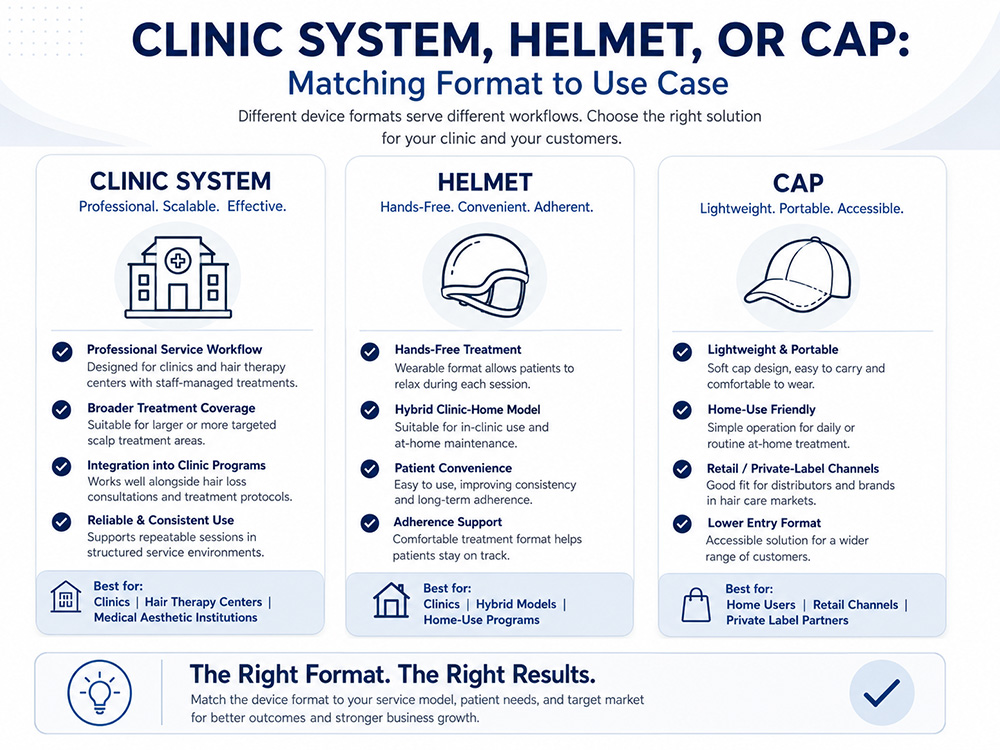
The fifth factor is device format. A clinic-based system may support professional service workflows, while a helmet or cap may support hybrid or home-use models. Clinics should choose based on the service they plan to offer, not simply on which model looks more advanced.
The sixth factor is expectation management. LLLT should be described as a supportive, noninvasive hair growth option for selected patients. It should not be presented as a guaranteed solution for all hair loss types.
What This Means for Distributors
For distributors, the best sales strategy is not to lead with “more diodes” or “better wavelength” alone. Those points can support the conversation, but they should not be the entire positioning.
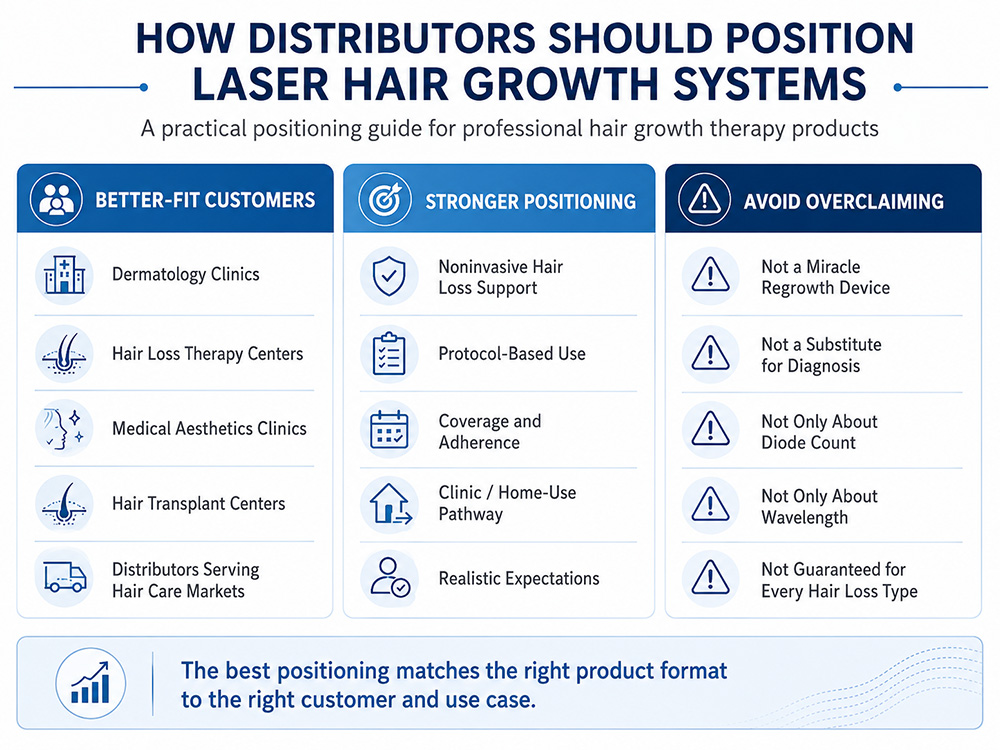
Better-fit customers may include dermatology clinics, hair loss therapy centers, medical aesthetics clinics, hair transplant clinics, professional hair care centers, and retail or private-label partners. But each customer type may need a different product format.
Clinic systems may be easier to position for professional treatment rooms and staff-managed services. Helmets may fit customers looking for hands-free use and hybrid clinic-home workflows. Caps may be suitable for lighter home-use or retail-oriented channels. KernelMed’s hair growth system category supports this broader product-line approach by listing professional systems, helmets, and cap formats together rather than presenting the category as a single device type.
Distributors should also avoid overclaiming. “Hair regrowth” messaging should be grounded in realistic expectations, especially because hair loss type, duration, age, adherence, medical history, and combination therapy can all affect outcomes.
Choosing Based on Workflow, Not Just Specs
A laser hair growth system should be evaluated as part of a workflow. That means asking practical questions.
Can the clinic identify suitable patients? Can staff explain the treatment clearly? Does the device format fit the room, service model, and expected session frequency? Will patients use it consistently? Does the distributor understand whether the buyer needs a clinic system, a helmet, a cap, or a mixed product portfolio?
These questions are more useful than asking only whether a device has 650 nm or 655 nm light, or whether one product has more diodes than another.
The strongest product positioning is not “more powerful” or “more advanced” in a vague way. It is: the right format for the right hair loss workflow, with realistic expectations and consistent use.
Conclusion
Laser hair growth systems can play a practical role in modern hair loss care, especially when clinics and distributors understand their real place in the workflow. Wavelength, diode count, and treatment time are useful specifications, but they are not enough to decide whether a system is right.
Clinics should evaluate patient type, treatment coverage, adherence, device format, workflow repeatability, and follow-up. Distributors should position the product line by customer type and use case rather than by specifications alone.
Explore KernelMed's hair growth systems for clinic-based therapy, helmet-style treatment, and portable cap formats.
FAQ
Is LLLT effective for hair growth?
LLLT has clinical evidence supporting its use in androgenetic alopecia, including randomized studies and systematic reviews, but outcomes depend on patient selection, device protocol, and consistent use. It should be positioned as a noninvasive supportive option, not a guaranteed cure.
What wavelength is commonly used for laser hair growth?
Many hair growth laser devices use red light around 650 nm to 655 nm, and some devices use combinations of lasers and LEDs. However, wavelength alone does not determine whether a device fits a clinic or distributor workflow.
Is diode count the most important factor?
No. Diode count is easy to compare, but treatment coverage, device fit, comfort, session consistency, protocol design, and real-world adherence are also important.
What is the difference between a clinic system and a laser hair growth helmet?
A clinic system is usually better for staff-managed professional workflows. A helmet is more suitable for hands-free use, hybrid clinic-home use, and patient convenience.
Who is the right customer for a professional laser hair growth system?
Better-fit customers may include dermatology clinics, medical aesthetics clinics, hair loss therapy centers, hair transplant clinics, and distributors serving professional hair care or scalp therapy markets.
References
[1] KernelMed. Hair Growth System product category.
[2] KernelMed. 650nm Low-Level Laser Hair Growth Therapy System KN-8000A.
[3] KernelMed. Laser Hair Growth Helmet KN-8000B.
[4] KernelMed. Laser Cap Hair Regrowth Therapy Helmet KN-8000C.
[5] KernelMed. Clinical Review of Low-Level Laser Therapy for Hair Regrowth.
[6] Pillai JK, et al. Role of Low-Level Light Therapy in Androgenetic Alopecia.
[7] Lueangarun S, et al. Systematic Review and Meta-analysis of Randomized Controlled Trials of LLLT in Androgenetic Alopecia.
[8] American Academy of Dermatology. Hair loss: Diagnosis and treatment.